


Published on: 02/13/2026


Description
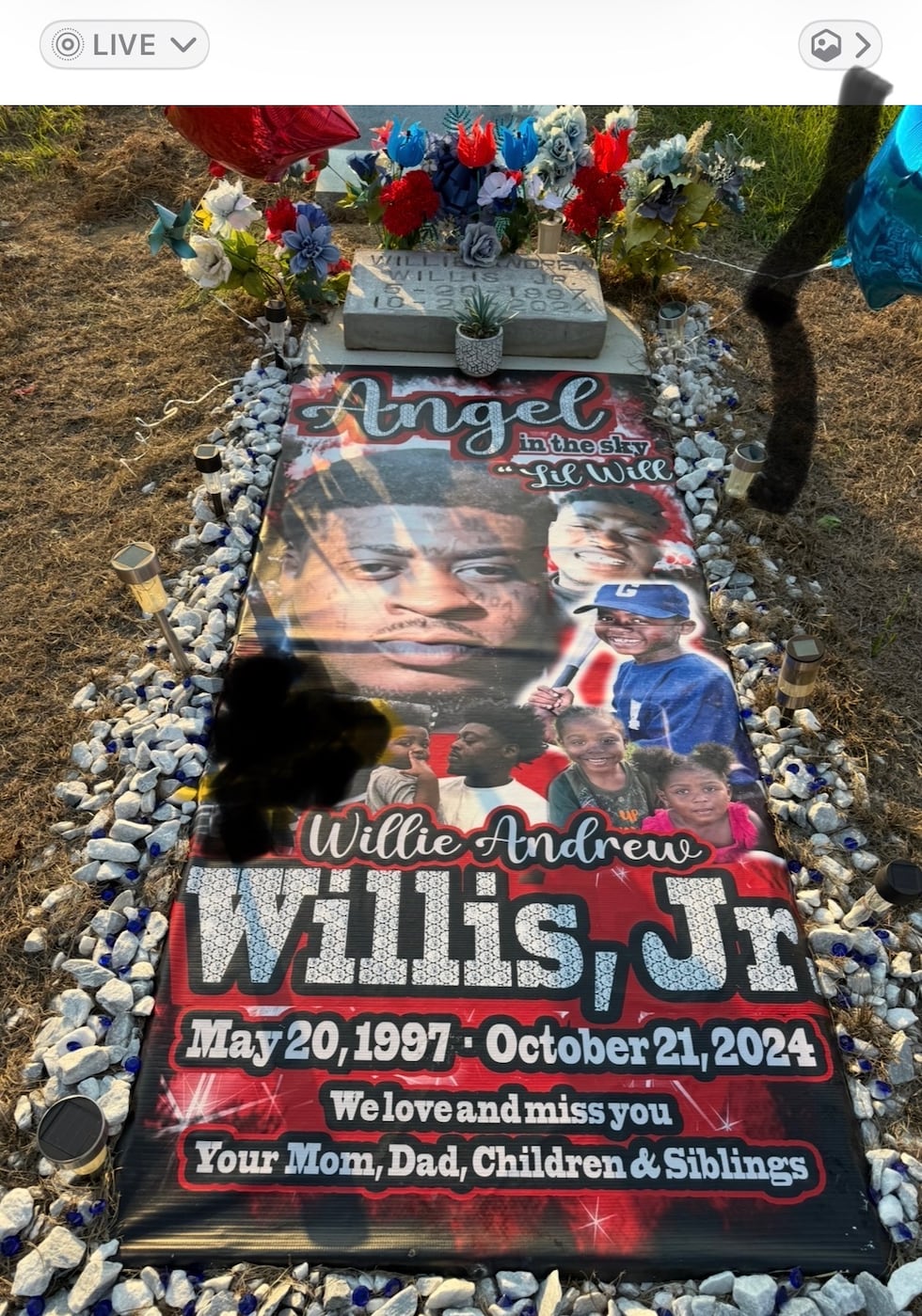
THOMASVILLE, Ga. (WALB) - The family of Willie Andrew Willis Jr. is still searching for answers one year after he suffered catastrophic injuries and died while incarcerated at Calhoun State Prison.
Willis told his family he had been thrown from a balcony and left unable to move. The family said they still don’t know how the incident happened or why it took nearly an hour before he was airlifted for treatment.
Medical records list sepsis as the cause of death, but the family believes critical time was lost and accountability is missing.
“I’m looking for answers and justice about my son,” said Revonda Young, Willis’s mother. “Then we heard a different story where the nurses say he came and got a Tylenol, and then he went back to his dorm and fell out and couldn’t move anymore. My son was on a ventilator; he couldn’t breathe, couldn’t move his body, and couldn’t walk away. He was paralyzed from the waist down.”

THE HIDDEN DEATH TOLL
Georgia deliberately hides true number of prison homicides, federal investigation finds
Willis’s search for answers has revealed a disturbing pattern: Georgia systematically underreports deaths in its prison system.
According to a comprehensive U.S. Department of Justice investigation, Georgia reported only 6 homicides in its prisons during the first five months of 2024. But internal GDC incident reports documented at least 18 deaths as homicides during the same period.
“GDC’s homicide-reporting practices shield the State from public accountability for homicides in the prisons,” the Justice Department report states.
The federal investigation found that deaths clearly identified as homicides in prison incident reports are listed as “unknown” in official mortality data — sometimes for years.
Examples of misclassification:
- Two homicides from 2021 are still listed as “unknown” in 2024 mortality data, even though GDC’s own incident reports, GBI autopsy records, and EMS records confirm one man was stabbed and another was choked to death.
- Seven deaths from 2022 were categorized as “undetermined” or “natural” for two years before finally being reclassified as homicides in 2024.
“The State cannot confront and address the serious violence in its prisons if it does not accurately track and account for deaths that occur on its watch,” the Justice Department concluded.
INVESTIGATION FAILURES
Less than 10% of prison fights investigated, federal report finds
The Justice Department investigation revealed systemic failures in how Georgia investigates violence in its prisons.
According to GDC’s own incident report records from 22 prisons:
- Less than 10% of fights were forwarded for investigation
- Less than 23% of inmate-on-inmate assaults were investigated
- Less than 6% of incidents involving weapons were investigated
- Even incidents involving serious injuries, less than 12% were forwarded for investigation
In one case documented by federal investigators, a March 2020 assault at Coastal State Prison was forwarded to GDC’s Office of Professional Standards for investigation, but investigators could find no records that such an investigation took place. The same individual reentered the prison system in 2022 and strangled his cellmate to death at Georgia Diagnostic and Classification Prison. The victim was an older man who used a wheelchair and was serving a sentence for a non-violent charge.
“Even when investigations reveal staff errors, accountability is often missing,” the federal report states.
Georgia’s massive prison population faces deadly conditions
Georgia imprisons 49,980 people, making it the fourth-largest prison system in the country behind Texas, California, and Florida. More than 10,000 of those incarcerated are under 30 years old — that’s one in every five prisoners.
Over 40% are serving time for non-violent offenses, yet they face increasingly deadly conditions. Since 2020, there have been 1,715 prison deaths, with 21 reported already this year. An estimated 70% of those deaths are due to homicide.
Willis’s death reflects a larger crisis within Georgia’s correctional system. A recent federal report reveals a disturbing pattern of violence, neglect, and lack of accountability within the Georgia Department of Corrections.
From 2018 to 2023, 142 people died in GDC prisons, according to the Justice Department findings. Georgia’s homicide rate in its state prisons is nearly triple the national average, based on 2019 data.
Beyond deaths, there were over 1,400 reported incidents of violence between January 2022 and April 2023. Nearly half resulted in serious injury, and many required off-site medical treatments.
GDC prisons are severely understaffed, with correctional officer vacancy rates over 50% since mid-2021, the report found. This means incarcerated individuals are often left unsupervised, and staff are unable to respond effectively to violence.
HOMICIDE RATE NEARLY TRIPLE NATIONAL AVERAGE
From 2018 to 2023, 142 people were killed in GDC prisons, according to the Justice Department findings. Georgia’s homicide rate in its state prisons is nearly triple the national average, based on 2019 data.
The national average homicide rate in state prisons was 12 per 100,000 people in 2019. Georgia’s rate was 34 per 100,000 people — almost triple. And the numbers have increased dramatically since then, with 28 homicides in 2020, 28 in 2021, 31 in 2022, and 35 in 2023, according to GDC data.
Beyond deaths, there were over 1,400 reported incidents of violence between January 2022 and April 2023. Nearly half resulted in serious injury, and many required off-site medical treatments.
The Justice Department investigation found that violent incidents are consistently underreported due to a lack of staff supervision. Many incidents occur in unsupervised housing units and are never reported at all. Incarcerated people told investigators they don’t report incidents because they don’t expect staff to take any action.
SEVERE UNDERSTAFFING LEAVES INMATES UNSUPERVISED
GDC prisons are severely understaffed, with correctional officer vacancy rates over 50% since mid-2021, the report found. This means incarcerated individuals are often left unsupervised for hours, and staff are unable to respond effectively to violence.
The report describes an “environment of fear and complacency” within the system, where violence, stabbings, and sexual assaults are systemic problems. Gangs control housing units, directing where other incarcerated people sleep and extorting incarcerated people and their families for money.
“It could be better if the system would do better, but it seems like the system doesn’t care that these inmates are dying and families deserve better and justice for their loved ones,” said Teresa Adams, Willis’s aunt.
The Justice Department found that in many prisons, door locks are inoperable or manipulable, allowing incarcerated people to exit cells and housing units unauthorized. Contraband weapons, illicit drugs, and cellphones are commonplace across the system.
At several prisons, the federal investigation found that one correctional officer was assigned to supervise two entire buildings — each comprising multiple housing units and hundreds of incarcerated people — for an entire 12-hour shift.
30-MINUTE DELAYS IN EMERGENCY MEDICAL CARE
Understaffing directly leads to significant delays in emergency medical responses. EMS directors told federal investigators that emergency medical teams are delayed an average of 30 minutes during emergency responses to GDC prisons, waiting for security staff to open the gates necessary to access medical departments.
The delays can be a matter of life and death. The federal report cites cases where individuals were found hours after dying or were left to tend to their own severe injuries.
Federal investigators interviewed incarcerated people who reported cleaning and dressing their own or others’ wounds using toothpaste, coffee grounds, dirt, and makeshift bandages because medical help was delayed or unavailable.
In some cases, GDC records describe bodies discovered by staff after the onset of rigor mortis, indicating that hours had likely passed since the individual had died.
DEATH FROM DEHYDRATION AT CALHOUN
One particularly disturbing case documented in the federal report occurred at Calhoun State Prison — the same facility where Willis died.
In February 2023, an incarcerated person was found dead in his restrictive-housing cell, leaning against the door and wrapped in mattress padding. About 30 minutes after a GDC officer noticed the man had not moved for hours, emergency responders were called.
The coroner reported that the incarcerated person’s cell was a mess: the mattress torn up on the floor, food trays strewn about. The body was stiff; the coroner believed the person had been dead for seven to eight hours before he was found.
Before this person’s death, no one had entered his cell for two days. The flap in the door had been locked shut earlier that week. Incarcerated people reported to federal investigators that the deceased person had thrown water out of his cell flap and that staff had shut off the water supply to his room, closed the flap, and did not deliver meals to him.
His cause of death was dehydration with renal failure.
MULTIPLE DEATHS AT CALHOUN STATE PRISON
Willis’s death is one of at least four homicides at Calhoun State Prison documented in news reports and federal findings.
Other reported deaths at the facility include:
- DaQuavious Cachone Lackey, 21, who died after being stabbed by a cellmate
- Kenneth Piper, who was found dead in May 2024, with his death under investigation
- The Feb. 2023 dehydration death was documented in the federal report
A 2022 homicide at Calhoun State Prison, documented in the Justice Department investigation, highlighted multiple staff errors in housing decisions. The homicide occurred after staff moved an assailant out of segregation, to the general population, and then back to segregation without following classification and housing assignment procedures. When staff moved the individual back to segregation, he requested to be placed in a particular cell, and staff housed him there with a cellmate. The next day, the two cellmates told an orderly they wanted to be separated. One day later, an orderly saw the individual being beaten by his cellmate. The man died from blunt force trauma injuries and a stab wound to the neck.
GDC closed its criminal investigation without a thorough administrative review into the breakdown of its classification process. There was no evidence of discipline or counseling in the personnel files of three employees whose errors were identified in the investigation as relevant to the man’s death.
LACK OF ACCOUNTABILITY
Investigations into incidents often reveal policy violations and staff errors, yet accountability is frequently missing, the federal report found.
The GDC “fails to report and investigate serious incidents of harm,” often underreporting homicides and other violent incidents, according to the federal findings.
The department frequently rejects grievances from incarcerated individuals for minor procedural issues, even when serious safety concerns are raised. In one example cited in the federal report, an incarcerated person at Calhoun State Prison filed a grievance in February 2023 alleging he had been the victim of attempted extortion, had witnessed a serious assault, and that there was significant gang-related violence in his housing unit. The grievance was rejected as untimely, with no notation of follow-up or whether the issues were sent to appropriate channels to be addressed.
“Justice for my grandson and the rest of the guys that’s in there, because they do those inmates so bad. I just want justice for my grandson,” said Barbara Davis, Willis’s grandmother.
FAMILIES DEMAND TRANSPARENCY
Families like Willis’s are left with unanswered questions, demanding transparency and justice for their loved ones.
The Justice Department investigation concluded that Georgia’s prison system fails to provide incarcerated persons with the constitutionally required minimum of reasonable physical safety. The report calls for immediate reforms to address staffing, security infrastructure, medical response times, incident reporting, and accountability.
Families across Georgia are demanding the same thing: transparency about how their loved ones died and accountability for a system the federal government calls unconstitutional.
WALB reached out to the Georgia Department of Corrections multiple times for comment on the federal findings and their mortality statistics. We have not received a response.
You can read the full Department of Justice findings here.
Have a news tip or see an error that needs correction? Let us know. Please include the article’s headline in your message.
To stay up to date on all the latest news as it develops, follow WALB on Facebook and X (Twitter). For more South Georgia news, download the WALB News app from the Apple Store or Google Play.
Copyright 2026 WALB. All rights reserved.
News Source : https://www.walb.com/2026/02/13/family-demands-answers-after-inmate-dies-following-balcony-fall-sga-prison/
Other Related News
02/13/2026
TIFTON Ga WALB - A Tifton native is working to make sure local Black history is not forgot...
02/13/2026
AMERICUS Ga WALB An electrical fire has destroyed a downtown Americus craft store displac...
02/13/2026
ALBANY Ga WALB Chehaw Park and Zoo will host Conservation Hearts on Saturday a Valentines...
02/13/2026
TODAYSATURDAY Today will be sunny while clouds increase on Valentines Day Temperatures rem...
02/13/2026
ATLANTA Ga WALB - The Atlanta Braves and Gray Media have announced an expanded spring trai...

Follow

Download Our App


Copyright 2022 © Albany Metro Community. All Rights Reserved