


Published on: 09/14/2026


Description
Palm Coast, Florida (Atlanta News First) — Lindsey Isaacs was asleep in her apartment when Florida Highway Patrol troopers began pounding on her door, ready to tell her they believed she was responsible for the deaths of three people.
Their evidence — images of Isaacs’ vehicle captured by a Flock Safety camera near the Deland, Florida scene and “marks” on the Durango they alleged were “consistent with the damage” to the hit vehicles.
“I thought I was getting set up. I didn’t understand what was going on,” Isaacs said.
Because of images of her license plate and claims of what would turn out to be non-existent physical evidence, Isaacs spent 13 days in jail after being arrested and denied bond for crimes she did not commit.
Flock asserts its technology is simply an investigative tool and that it is up to law enforcement to correctly identify perpetrators when making arrest decisions, but critics allege limited oversight puts innocent people at risk.
Standing outside her Palm Coast, Florida home in the early hours of Oct. 5, 2025, two Florida state troopers claimed Isaacs’ Dodge Durango had been seen the night before going over 100 miles per hour on Interstate 4, swerving ‘aggressively’ and ultimately causing a fatal, multi-vehicle crash before fleeing into the night.
Isaacs’ vehicle was seized and held for months, but it wasn’t until 10 weeks after she filed a petition to get the car back in April of this year that there was movement.
Only instead of having her car returned, on April 17 Isaacs was booked into the Volusia County jail facing three counts each of vehicular homicide and leaving the scene of a deadly crash — crimes that could carry a sentence of life in prison.
They are also crimes Lindsey Isaacs did not commit.
“A lot of times, you have a case where, you know, a person will tell you, ‘Oh, I didn’t do anything,’ but they were there, and they’ll say, ‘Oh, no, I didn’t change lanes,’ and something like that. They put themselves there, but not doing anything,” said Isaacs’ attorney Patrick McGeehan.
“In Lindsey’s case, there was nothing indicating that she was ever there.”
An investigation by the Florida State Attorney’s office found it was a Dodge Durango that caused the fatal chain-reaction crash on Oct. 4, 2025 — a maroon one, evidenced by paint transfer on one of the hit vehicles.
Isaacs’ Durango is black.
“They had three descriptions of three different vehicles,” McGeehan said of the initial investigators. “They had one witness that said a black Dodge Durango, one that said a white Dodge Durango, and one that said a maroon Dodge Durango with a partial tag. For some reason, [Florida Highway Patrol] never went past the black Dodge Durango.”
According to the arrest affidavit used to jail Isaacs for 13 days — as well as the one used to arrest a suspect after Isaacs was exonerated — officers in Deland’s traffic homicide investigation unit conducted a search of area Flock cameras looking specifically for a black Durango near the time of the crash.
“They hooked onto this black Dodge Durango to the exclusion of everything else,” McGeehan said.
The Flock images and data led investigators to Isaacs’ front door, as cameras had captured Isaacs’ movements throughout the evening, including one camera located three miles west of the location of the crash.
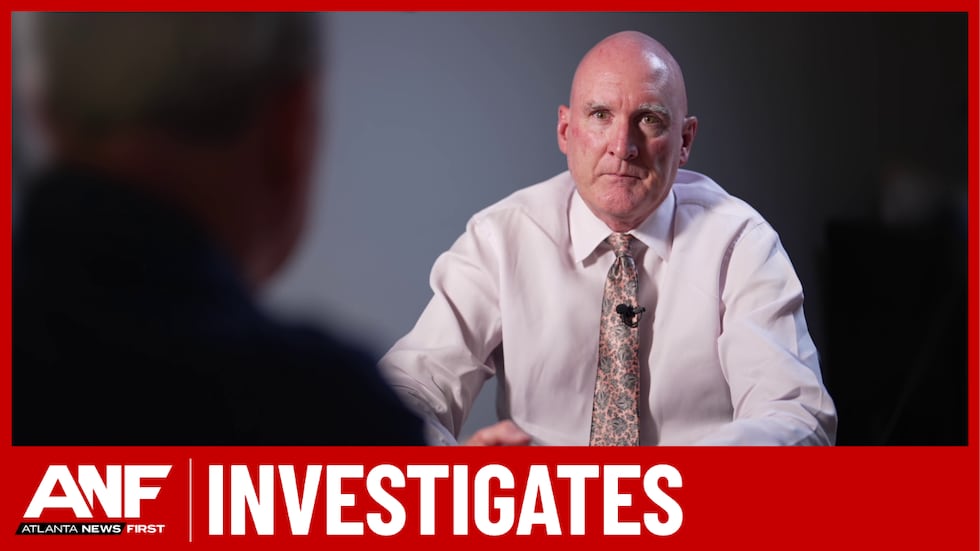
McGeehan and his client said they believe the Flock data was not utilized as an investigative lead, but rather as supposedly definitive proof of Isaacs’ guilt.
“Absolutely confirmation bias, to the highest degree,” McGeehan said.
A civil filing by Isaacs against the two investigating troopers not only alleges that the investigation was inadequate and evidence pointing to Isaacs’ innocence ignored, but that the officers even made false statements in legal filings and court to support a conclusion the license plate reader data suggested.
“Oh, there was a major failure. Major failure of police work. Major failure of basic investigative skills,” McGeehan said.
The Florida Highway Patrol did not respond to Atlanta News First Investigates’ requests for comment on Isaacs’ case or the troopers’ conduct.
Flock Safety told Atlanta News First Investigates in a statement that its technology was never the problem in the case — and pointed to an assertion in Isaacs’ civil case that the Flock hit should have cleared Isaacs instead of implicating her, arguing it actually showed she was three miles away from the crash site two minutes before the first 911 call.
A spokesperson said:
“Flock cameras provide investigative leads; they do not identify perpetrators, determine guilt, or make arrest decisions. In fact, the complaint itself calls the Flock evidence “exculpatory, not inculpatory,” meaning the evidence pointed away from Ms. Isaacs rather than implicating her: it accurately placed her vehicle three miles from the crash scene just two minutes before the crash. Characterizing her arrest as the result of Flock technology fundamentally misrepresents both the allegations and the role our technology played in this case.”
However, among the growing criticism of the company and its technology are allegations that the scope of the camera network and the artificial intelligence tools designed to “connect the dots” increases the risk of faulty conclusions built on thin evidence.
In some cases, people have been stopped by police or arrested because of an error in the data captured by automatic license plate readers, including Flock cameras.
The Institute for Justice has tracked more than two dozen cases of innocent motorists stopped or even held at gunpoint because their vehicle was believed to be stolen or involved in another crime due to a misread of a license plate or other error.
Flock has asserted that its cameras correctly capture 93 out of 100 license plates, but as in Isaacs’ case, there have been cases where even when the information is captured correctly, the wrong person ended up charged with a crime.
In Colorado, Chrisanna Elser was falsely accused of stealing packages from a porch after Flock cameras showed her truck passing through town around the same time as the theft, with the investigating officer saying he was “100% sure” she was the woman seen in doorbell camera footage of the crime.
Elser spent weeks gathering her own evidence to prove her innocence and get the charges dropped.
“It sounds like it flipped the script to, ‘You’re guilty until you prove yourself innocent,’” Elser said in an interview with InvestigateTV.
A woman in Rhode Island filed a lawsuit in June after she was erroneously arrested and charged with reckless driving and eluding police, the accusations based in part on Flock camera footage.
In that case, an officer had pursued a vehicle for failure to stop, claiming the driver was a white woman with red hair. According to court records, after researching the vehicle’s owner and one of his supposed associates, officers searched the associate’s social media accounts and identified the plaintiff as the woman with red hair.
One of the officers reported pulling Flock footage of the suspect vehicle and concluded that the driver matched the plaintiff’s driver’s license photo — something the defendants in the civil case admitted to in their filed response.
McGeehan said that type of conclusion is a major issue he has with how Flock technology is being used by law enforcement.
“It’s an investigative tool. It’s not the end-all. And right now, a lot of them are doing it as the end-all, like these troopers did in this case,” he said, referencing the false accusation against Isaacs.
McGeehan, who himself is a former sheriff’s deputy, said he supports giving investigators access to license plate data, but argues the system now operates with no real oversight of how it’s used.
“I mean, it’s a good tool, but now it’s unrestricted,” he said. “It’s the Wild West of Flock.”
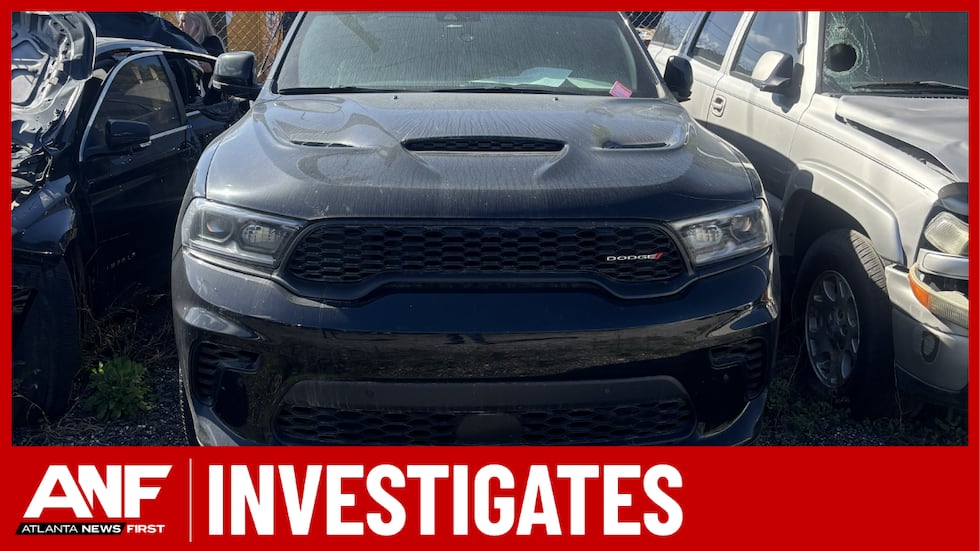
During Isaacs’ bond hearing, McGeehan produced evidence — photographs of Isaacs’ Durango as it sat in the police impound lot — that he argued showed the vehicle exhibited no damage at all, much less any that would indicate it had been in a crash.
The judge at the hearing found the state had met its burden of proof to keep Isaacs in jail, but Assistant State Attorney Mike Willard found McGeehan’s evidence compelling. Willard reached out to the Florida Highway Patrol’s Specialized Investigation and Reconstruction Team, which began reviewing the case.
The team opened an investigation into the case, and on the first day determined Isaacs’ Durango did not have any damage that would suggest it was involved in the crash.
After re-interviewing witnesses, they quickly identified a female driver of a maroon Durango had ties to one of the victims, and her license plate matched the partial plate number provided in one of the original 911 calls. Investigators also found evidence the maroon car had been in a high-speed crash — and indications that the driver had tried to conceal that evidence.
On May 22, the state dropped all charges against Isaacs, and a few hours later arrested the driver of the maroon vehicle. That driver has pleaded not guilty.
Having worked similar cases for the Miami-Dade Sheriff’s Office, he said he found the efforts of the original investigators to be reprehensible.
“Their actions, in this case, were embarrassing. And personally, as a former traffic homicide investigator, it was personally embarrassing to me,” he said.
After 13 days she described as “worse than Hell,” Isaacs regained her freedom, but said she still paid a price.
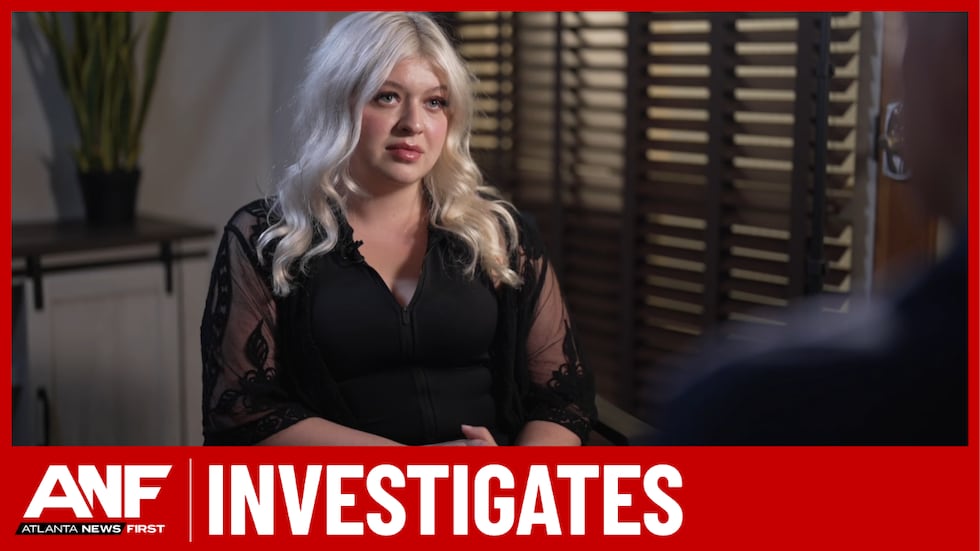
“I have to carry this like a big bag of bricks for the rest of my life,” she said.
Mediation in Isaacs’ civil lawsuit against the troopers who accused her of killing three people is scheduled for later this month.
She isn’t suing Flock and said she blames the officers who used the technology more than the cameras themselves — but she still doesn’t like them.
“It would be nice if we didn’t have them,” she said. “I know that they do help some cases and some scenarios, but it is an invasion of privacy, and they are getting misused in a lot of different ways.”
Isaacs and other Floridians will soon see fewer Flock cameras as they go about their daily lives: On August 31, Florida’s governor moved to strip Flock cameras and other fixed license plate readers from state rights-of-way within 30 days.
Volusia County, where Isaacs was jailed, was among the first sheriff’s offices in the state to announce it would remove its own Flock cameras.
But when she does drive past one, Isaacs said her experience will likely continue to haunt her.

“It’s like it replays in my mind immediately, everything that happened to me,” she said, “and it’s like, they’re watching me. They’re watching, you know? They’re watching everybody.”
Download our Atlanta News First app for your latest news and information.
Atlanta News First podcasts are available now on: Spotify | Apple Podcasts | Amazon Music | YouTube
Copyright 2026 Gray Media Group, Inc. All Rights Reserved.
News Source : https://www.walb.com/2026/09/14/flock-camera-hit-sent-troopers-her-door-they-had-wrong-car-2/
Other Related News
09/15/2026
COFFEE COUNTY Ga WALB A man from Douglas will spend the next six decades in state prison ...
09/15/2026
ALBANY Ga WALB Michael Persely Albanys current Police Chief is set to retire according to...
09/15/2026
AXSON Ga WALB An 11-year-old boy was mauled by three dogs near Wood Duck Road in Axson on...
09/15/2026
ALBANY Ga WALB Dougherty County leaders are considering a new juvenile curfew ordinance th...
09/15/2026
ADEL Ga WALB Shirley Scruggs Campbell has been on dialysis for 12 years and six months Sh...

Follow

Download Our App


Copyright 2022 © Albany Metro Community. All Rights Reserved