


Published on: 04/09/2026


Description
ALBANY, Ga. (WALB) - A man with South Georgia ties is playing a key role in one of NASA’s most historic missions. He told WALB in an exclusive interview that this project is just the beginning.
At just 26 years old, Kylel Scott is a full-time Aerospace Research Engineer at NASA’s Langley Research Center in Virginia and is contributing to the Artemis II mission, which is the first crewed lunar flyby since the Apollo era.
Scott said some parts of his life may have seemed like a coincidence, but he believes he was destined for this career.
His name, for example, sounds like “Kal-El,” which was Superman’s birth name.
“My parents were intentional with the name,” Scott said. “And then I ended up working at NASA. So I guess it’s a pretty interesting sequence of events.”

The journey to NASA
Scott said his sights were not always set on space. Math and science were constants in his life as his family moved around.
“I was kind of a late bloomer,” he said. “I always had pretty good grades, especially in math and science. It was always a little bit of a challenge: honors courses, AP courses, dual enrollment.”
That love of problem-solving led him to engineering. Scott earned a master’s degree in Robotics and Autonomous Systems from Arizona State University and has contributed to two research publications.
Scott said there were moments during his undergraduate program that deeply impacted him: studying implicit biases and inclusivity in engineering spaces marked one of his first deep analytical dives in research.
An internship at the Langley Research Center opened the door to his full-time job with NASA. He has been an Aerospace Research Engineer there since 2022.
“I was presented with an opportunity and took full advantage of it,” Scott said.
A day in the life
Scott described his day-to-day as mundane, but important.
“It’s not as glamorous as you want to think,” he said. “I definitely have a desk and an office.”
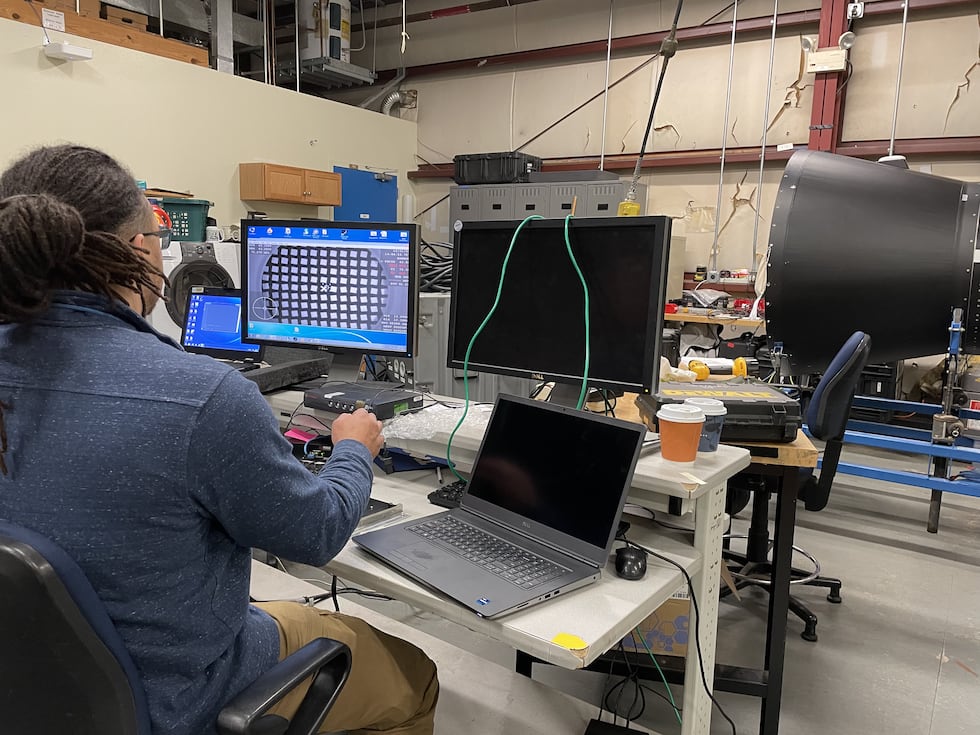
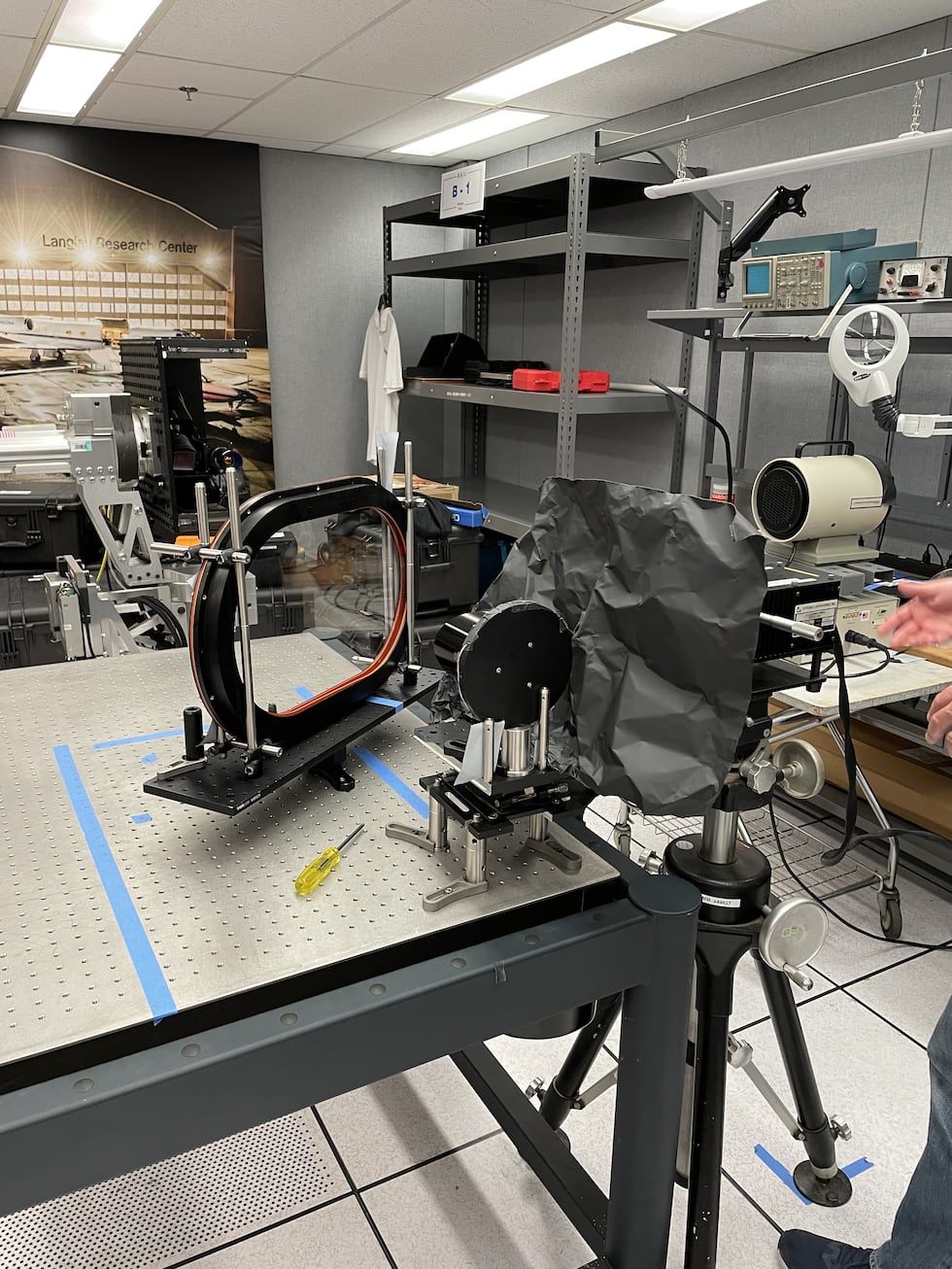
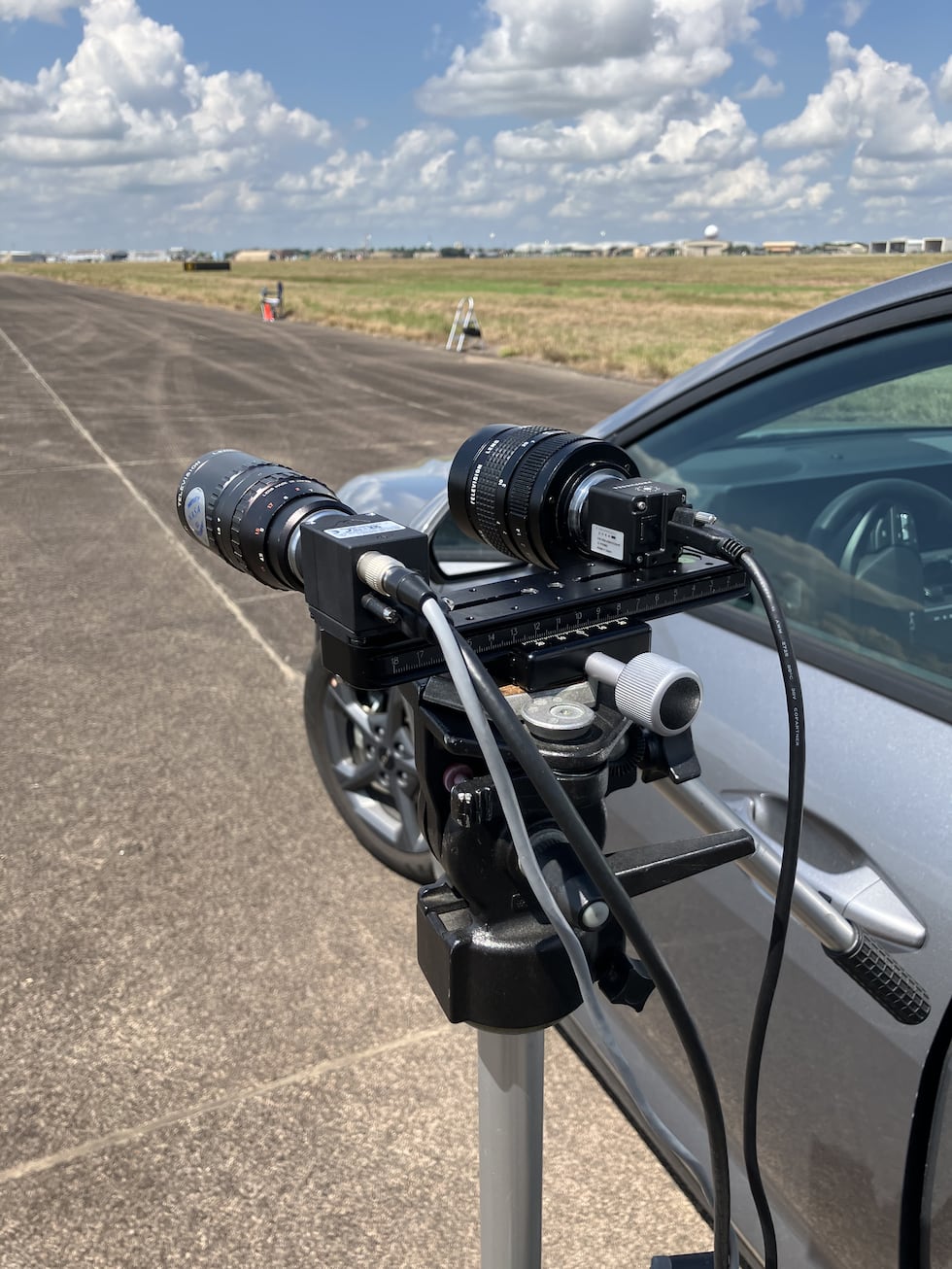
In plain terms, Scott said his day involves processing scientific imagery and data from rocket launches, satellite deployments and capsule reentries. His team captures infrared video and spectroscopy data from aircraft flying at 40,000 feet to measure surface temperatures and analyze what comes off a vehicle as it reenters Earth’s atmosphere.
Planning for missions like Artemis II takes up to a year, but the actual observation window is extremely short.
“Doing it takes no more than five minutes,” Scott said. “And it is the longest five minutes ever.”
After that comes one to two years of data processing, analysis and presenting results to stakeholders.
“It’s never-ending,” he said. “But the actual part that involves a flight suit is 30 seconds to a minute.”
Artemis II
Artemis II is the first NASA mission to send astronauts around the Moon since Apollo 17 in 1972. The mission launched on April 1. Scott said being a part of it is something he doesn’t take lightly.
“It’s really interesting to see a lot of this time and effort and energy culminating into something that I get to be a part of on such a high level,” he said. “My colleagues have been working on this since I learned how to drive.”
His team was on the ground and watched the launch; some of their camera assets were even livestreamed on national television.
Now, Scott is in California and is prepared to image the capsule’s reentry from an airplane over the Pacific as Artemis II splashes down near San Diego on April 10.
“There’s a good chance that one of the astronauts might be sitting in the seat that I’m sitting in on the plane,” he said.
But he said he hopes Artemis II isn’t the peak of his career.
“I’m not sure if it’ll be the magnum opus of my career, and I kind of hope not,” Scott said. “But right now, it’s really up there.”
Beyond the work
Despite the historic nature of his work, Scott said his most memorable moments are made at home.
“My biggest memorable moments are actually my family,” he said. “They keep me level. I can talk to my wife about a bad presentation. I can talk to my mom when there’s something at work I’m not understanding.”
Some of Scott’s family lives in South Georgia, including in Albany. He said they are a reminder of where he came from, even as his work reaches the Moon.
You can find the extended interview with Scott below.
What’s next
Scott said he is aiming for growth.
“I just want to keep striving for greatness,” he said. “I love to learn. I love to keep progressing.”
And when asked if he would ever go to space himself —
“I could see myself doing it,” he said. “But I could also see myself doing what I do now and continuing to just help on the ground, which is also super interesting.”
Artemis II is expected to splash down on April 10. Scott said he and his team will watch from 40,000 feet.
Have a news tip or see an error that needs correction? Let us know. Please include the article’s headline in your message.
To stay up to date on all the latest news as it develops, follow WALB on Facebook and X (Twitter). For more South Georgia news, download the WALB News app from the Apple Store or Google Play.
Copyright 2026 WALB. All rights reserved.
News Source : https://www.walb.com/2026/04/08/26-year-old-with-south-ga-ties-helps-with-artemis-ii-mission/
Other Related News
04/09/2026
DOUGLAS Ga WALB - On this weeks Restaurant Roundup Pearl A Cottage Makery in Douglas which...
04/09/2026
CORRECTION WALB originally reported that the subjects of this story were a father and daug...
04/08/2026
CRISP COUNTY Ga WALB - The City of Cordele posted an announcement to Facebook on Wednesday...
04/08/2026
QUITMAN Ga WCTV - A Quitman man was arrested Friday in connection to a child molestation c...
04/08/2026
TODAY Unseasonably cool mostly cloudy in the afternoon and windy Out the door this morning...

Follow

Download Our App


Copyright 2022 © Albany Metro Community. All Rights Reserved